


How to play Yu-Gi-Oh? The ultimate guide for beginners
Yu-Gi-Oh! TCG is a fascinating Card game in which two Players try to defeat each other by reducing their opponent's Life Points to 0 with a Collection of Monsters, Spell Cards, and Trap Cards. In this blog post, we explain the basics of the game so that you are optimally prepared.

Preparation
Before you begin the game, you need:
- Deck
- Coin (optional)
- Dice
The Deck
Each player must have three different types of Decks. In addition, your Main Deck must contain between 40 and 60 cards.
- Main Deck
- Extra Deck
- Sideboard
Main Deck
The Main Deck is relatively self-explanatory. It is your main Deck, from which you also draw cards. It is advisable to keep the Deck size toward the lower end, at the minimum. A card may be included in the Deck a maximum of 3 times.
Extra Deck
This Deck contains all your Synchro and Fusion Monsters that can be used during the game when certain requirements are met. The Deck can contain between 0 and 15 cards and is not included when counting your Main Deck.
Side Deck
This Deck is also limited to 15 cards and allows you to flexibly adjust your battle strategy. After each Duel, you can exchange advantageous cards from the Side Deck with your Main Deck.
The Field
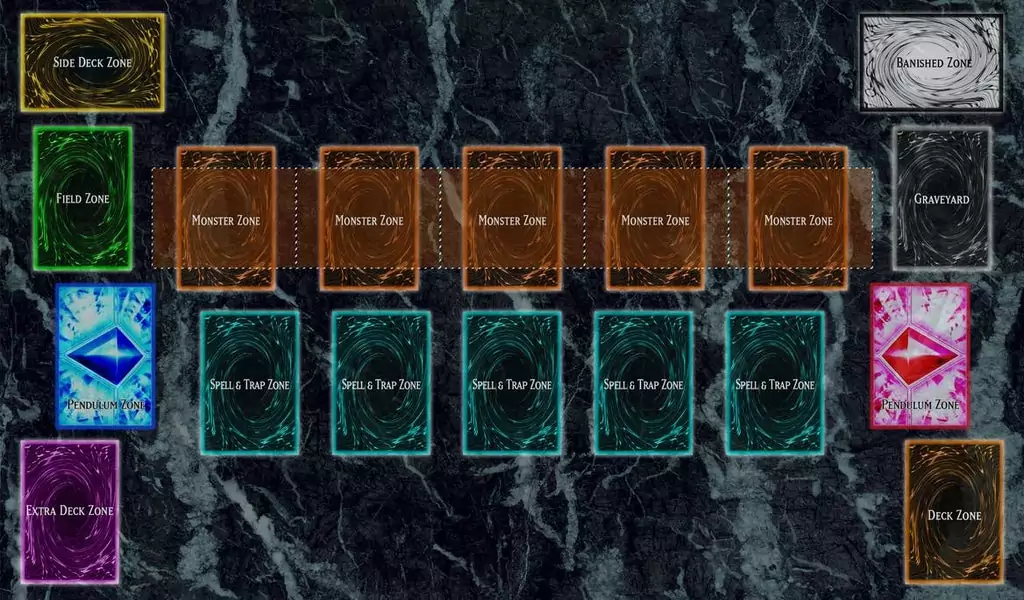
Before you can play Yu-Gi-Oh!, you need to know where cards can and cannot be placed during the game. The following zones are distinguished for this purpose:
- Main Monster Zone
- Spell & Trap Zone
- Graveyard
- Deck Zone
- Field Zone
- Extra Deck Zone
- Extra Monster Zone
- Pendulum Zone
The Zones in Detail
The field consists of a total of 30 individual zones and covers the playing field dimensions of both players. Here are some details about the most important zones:
- Main Monster Zone: This is where you Summon your monsters.
- Spell & Trap Zone: This is where you place your Spell and Trap Cards.
- Graveyard: This is where cards go that have been destroyed, discarded, or otherwise removed.
- Extra Deck Zone: This is where your Extra Deck is located.
- Field Zone: This is where you place Field Spell Cards that affect the entire field.
- Pendulum Zone: This is where you place Pendulum Cards to perform Pendulum Summons.
Monster Cards Explained

There are seven different types of Monster Cards:
- Normal Monsters
- Effect Monsters
- Synchro Monsters
- Fusion Monsters
- Ritual Monsters
- XYZ Monsters
- Pendulum Monsters
Monster Summon
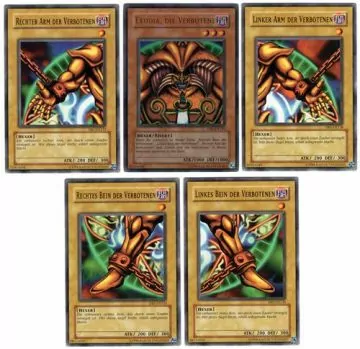
To summon a Monster Card, you must play it from your Deck. There are different types of Summons:
- Normal Summon
- Tribute Summon
- Flip Summon
- Special Summon
- Ritual Summon
- Fusion Summon
- Synchro Summon
- XYZ Summon
Spell and Trap Cards
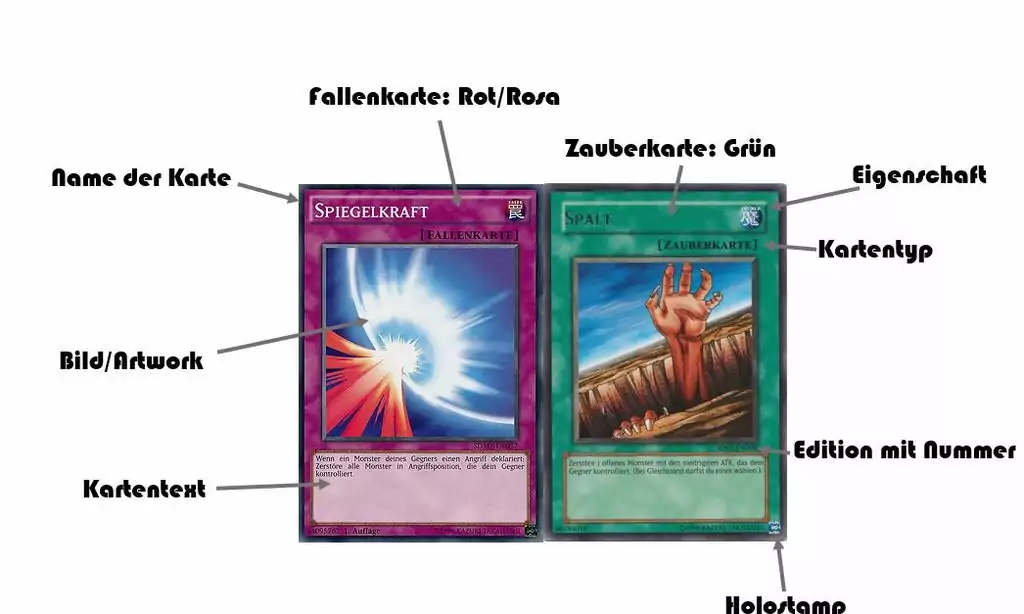
Types of Spell Cards:
- Normal Spells
- Ritual Spells
- Continuous Spells
- Equip Spells
- Field Spells
- Quick-Play Spells
Types of Trap Cards:
- Normal Traps
- Continuous Traps
- Counter Traps
Battle in Yu-Gi-Oh!
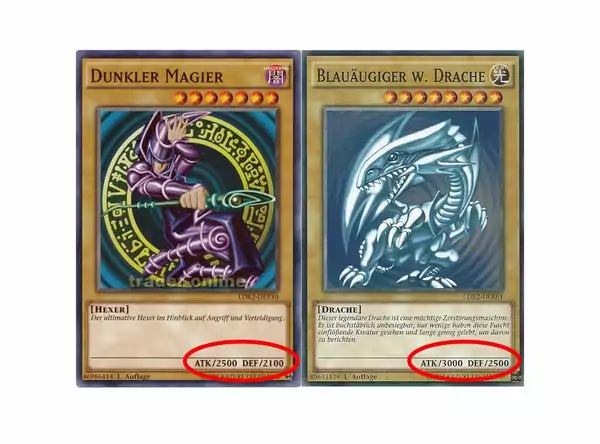
Battles in Yu-Gi-Oh! follow specific rules and phases. Here are the most important points:
- Face-Up Attack
- Face-Up Defense
- Face-Down Defense
Attack and Defense
A monster in face-up Attack Position can attack and has an ATK value (attack value). A monster in face-up Defense Position cannot attack but can defend.
Game Phases in Yu-Gi-Oh!
Each round consists of six phases:
- Draw Phase
- Standby Phase
- Main Phase 1
- Battle Phase
- Main Phase 2
- End Phase
Additional Rules
- Chains and Effects: Whenever a card is activated with an effect, Players can respond to it with other effects.
- Limitations: There are certain restrictions on the number of cards that may be included in the Deck.
Conclusion
Yu-Gi-Oh! is a complex but extremely exciting Card game. With this guide, you should be able to get off to a good start and further develop your skills. Good luck dueling!







Leave a comment
This site is protected by hCaptcha and the hCaptcha Privacy Policy and Terms of Service apply.